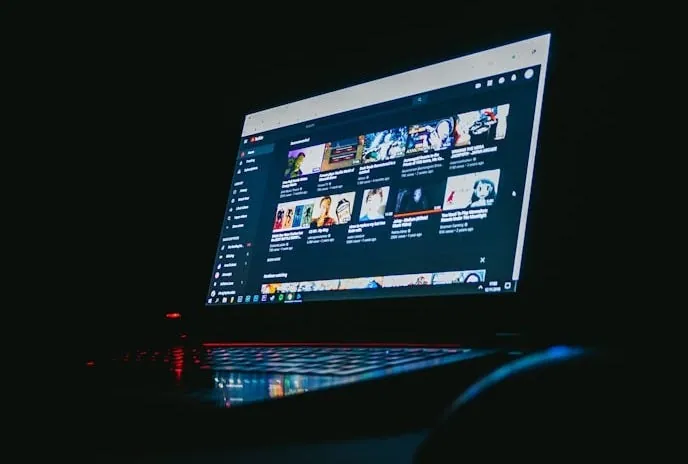
We live in the most information-rich moment in human history, and yet a lot of people feel strangely incapable.
- They’ve watched the videos.
- Read the threads.
- Saved the posts.
- Bought the courses.
- Talked about the idea.
But they still don’t feel grounded. They don’t feel confident. They don’t feel real.
Because your head can collect knowledge without being changed by it.
Your hands don’t let you do that.
Your hands demand contact with reality.
The lie of “I understand it”
There’s a kind of confidence that comes from explaining something. It feels like progress. It feels like competence.
But the shop will expose the gap in five minutes.
You can know the theory of a weld and still blow holes through the joint.
You can understand woodworking and still cut it short.
You can study leadership and still crumble under pressure.
You can learn the idea of discipline and still drift.
The difference is that making requires a second kind of knowing: embodied knowing.
You can’t fake it. You can’t posture your way through it. You can’t talk the metal into bending.
And that’s exactly why it changes you.
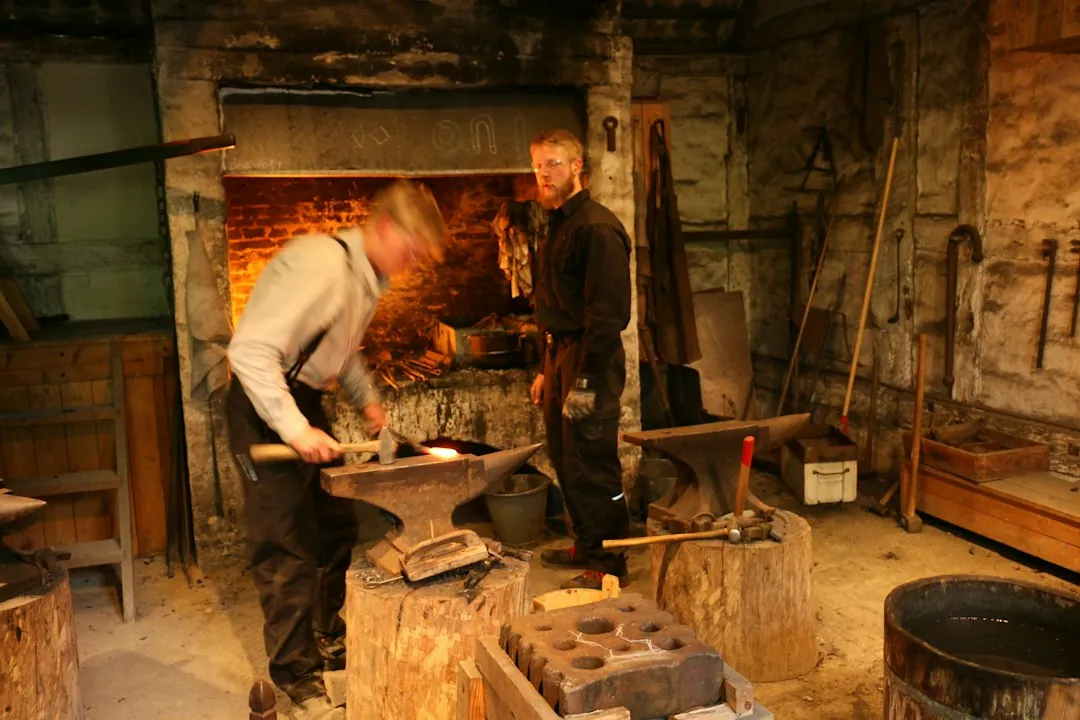
I had a field producer from the show Forged In Fire (History Channel TV show) in my shop a number of years ago. He forged a blade and really struggled at first, and he admitted that he’d been on the show since season 2 (it was now 7), and he could tell you everything that was going right or wrong from behind the lens. As he said, “I put the camera down, pick up a hammer, and I turn into an idiot.” Strong words for a self-assessment, but it’s how he felt. I quickly corrected him, pointing out that just watching misses the nuance that makes forging a craft. The only way to learn that nuance is to put the camera down and get to work. He did. It turned out great.
Your hands teach truth
A screen is polite. It will let you stay vague.
Reality is not polite.
A tape measure is honest.
A square is honest.
Heat is honest.
A blade’s edge is honest.
Gravity is honest.
Your hands work in a world where results are visible, and that visibility does something powerful: it gives you feedback without feelings.
It’s not personal. It’s not political. It’s not about your intentions.
It either fits… or it doesn’t.
It either holds… or it fails.
It either works… or it doesn’t.
That truth is refreshing in a world where everything is argued. In a shop, the outcome tells the story.
Your hands teach humility
This is one reason so many people avoid making: it’s humiliating at first.
The first weld is ugly.
The first drawing looks childish.
The first project wobbles.
The first plan falls apart.
That moment is a fork in the road:
- The consumer says, “I’m not good at this,” and walks away.
- The maker says, “Of course I’m not good at this—I’m new,” and stays.
And in staying, you practice something rare: the ability to be a beginner without quitting on yourself.
Humility isn’t thinking less of yourself. It’s accepting reality so you can improve.
Your hands train that.
Your hands teach patience
Nothing meaningful is instant. Not strength, not skill, not trust, not craftsmanship.
Making forces you to slow down enough to do it right:
- measure twice
- prep the joint
- grind the scale
- set the angle
- let it cool
- take the next pass
And if you rush it, reality punishes you.
Patience isn’t passive. Patience is disciplined timing.
It’s doing the right thing in the right order at the right pace—even when you want the reward now.
Your hands learn that faster than your head ever will.
Your hands teach standards
In a world where people argue about “good enough,” your hands bring you back to the only standard that matters:
Will it hold?
“Good intentions” don’t matter if the shelf collapses.
“Almost” doesn’t matter if the weld fails.
“Close” doesn’t matter if the hole pattern doesn’t line up.
Making teaches you to respect standards—because standards protect people.
And once you’ve learned that in the shop, you start noticing it everywhere:
- In your habits
- In your word
- In your leadership
- In your parenting
- In your faith
You stop lowering the bar to protect your ego. You raise your practice to meet the bar.
Your hands teach resilience
You cannot build without problems. There is no project without a surprise.
Things crack.
Things warp.
Tools break.
A mistake forces a redesign.
You learn the most important builder skill of all: recovering quickly.
Not spiraling. Not quitting. Not self-hating.
Just: “Okay. That didn’t work. What’s the next move?”
That ability—to stay calm, adjust, and continue—is one of the rarest forms of strength in modern life.
The missing ingredient: contact
A lot of people feel stuck because their life is disconnected from reality. Too much is abstract.
Emails. Opinions. Meetings. Screens. Metrics. Worry.
Your hands bring you back to contact:
- contact with material
- contact with process
- contact with effort
- contact with progress
And contact heals something in you.
It reminds you: I’m not just here to think about life. I’m here to build it.
What this means for your future
If you want more confidence, don’t start with affirmations.
Start with a project.
If you want more clarity, don’t wait for a lightning bolt.
Start with reps.
If you want more peace, don’t chase comfort.
Chase competence.
Because competence is earned calm.
And your hands are the fastest teacher.
Try this: 7 days of “hands first”
For the next week, do 20 minutes a day of something that forces real-world feedback.
Pick one:
- fix something in your home
- build a simple hook or shelf
- learn a basic hand tool skill
- sketch and measure a small project
- cook something from scratch
- practice a trade skill (welding beads on scrap counts)
- sharpen a blade and feel the difference
Keep it small. Keep it tangible. Keep it honest.
Because every day you put your hands to work, you’re not just learning a skill.
You’re learning yourself.
Question: What’s one skill or project you’ve been “thinking about” that would teach you more in one week of hands-on reps than a month of reading?
Originally published on Forge Your Future on Substack.
Keep reading